01
The narrow Siq al-Barid canyon
A short, shaded canyon — "the Cold Canyon" in Arabic — lined with Nabataean-carved facades, cisterns, and dining halls, far less crowded than Petra's own Siq.
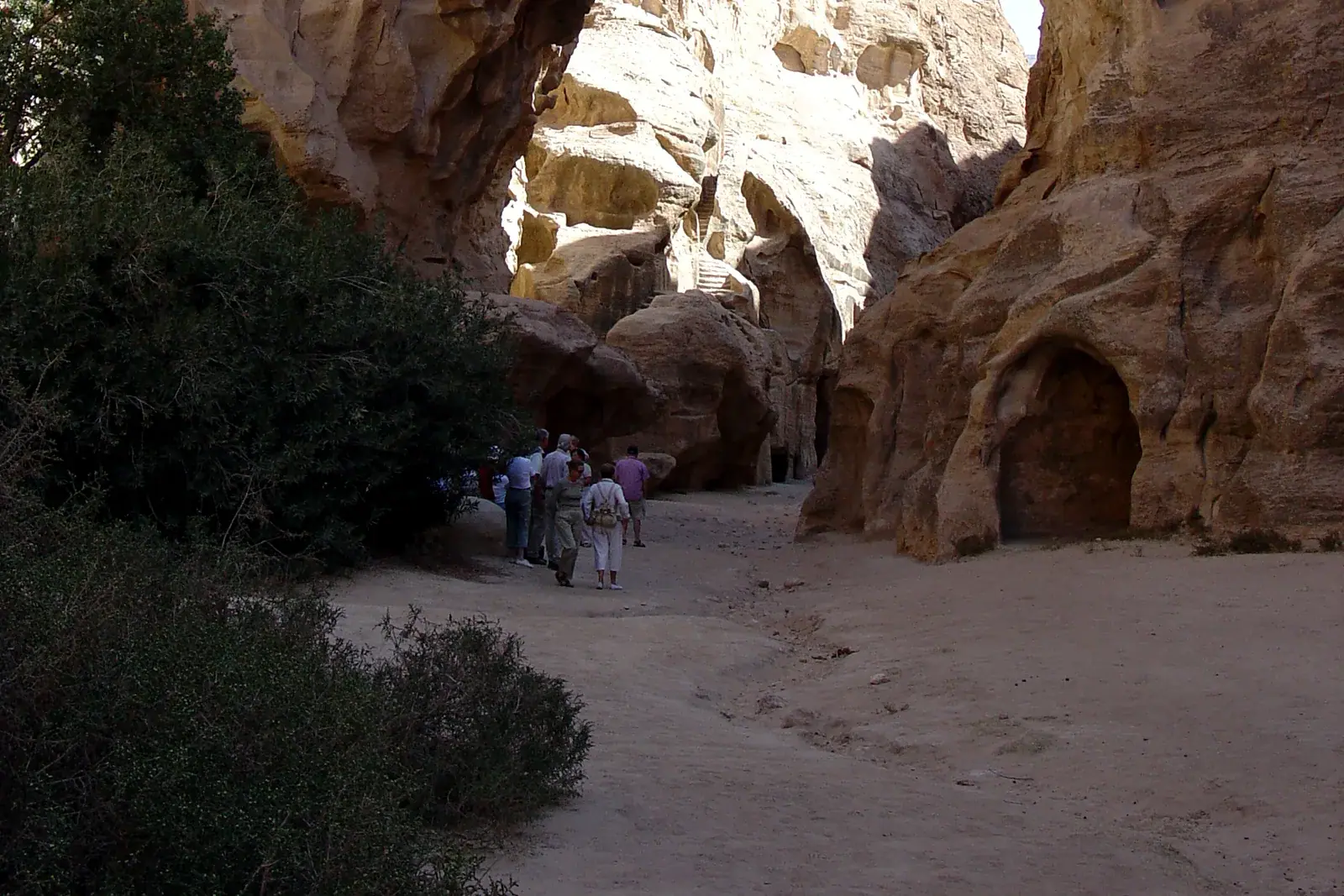
A free, uncrowded Nabataean canyon of carved facades a short drive from Petra, with a rare painted ceiling fresco
Little Petra, known locally as Siq al-Barid ("the Cold Canyon" — its narrow, high walls keep it shaded and noticeably cooler than the surrounding desert), sits about 8-9 km north of Petra's visitor centre, roughly 15 to 20 minutes by road through the Bedouin village of Umm Sayhoun. It was established around the 1st century CE as a Nabataean suburb and waypoint, most likely housing traders on the caravan routes before they entered Petra proper, and carved facades, cisterns and several biclinia (two-benched dining halls) line its short, narrow siq. Its single most famous feature is the Painted Biclinium, a rock-cut dining hall whose ceiling preserves the only surviving in-situ Nabataean figurative wall painting: grapevines, grape clusters and winged cupid-like figures (erotes), imagery linked to Dionysus, estimated to date from roughly 40 BCE to 25 CE. Little Petra lies within the boundary of Petra's 1985 UNESCO World Heritage inscription, though it's reached and visited separately from the ticketed Petra Archaeological Park — entry here is free, with no gate or ticket required. After the Nabataean kingdom's decline, Bedouin communities continued using the site for centuries, giving it a longer, more continuous history of use than Petra's more famous "lost city" narrative suggests. A roughly 6 km guided trail leads from the far end of the siq to Petra's Monastery (Ad Deir), arriving at Petra's back door, and a separate guided route links Little Petra with the Neolithic village of Beidha. With a fraction of Petra's crowds and no entrance fee, it rewards an unhurried visit rather than a rushed stop between bigger sights.
A short, shaded canyon — "the Cold Canyon" in Arabic — lined with Nabataean-carved facades, cisterns, and dining halls, far less crowded than Petra's own Siq.
A rock-cut two-benched dining hall whose ceiling preserves the only surviving in-situ Nabataean figurative wall painting — grapevines, grapes, and winged cupid-like figures, dated to roughly 40 BCE–25 CE.
Established around the 1st century CE as a suburb and stopping point for traders before they continued into Petra proper — a working outpost rather than a monument.
Unlike Petra itself, there's no gate, ticket, or Jordan Pass requirement here — just a small informal parking area with Bedouin vendors selling tea and snacks.
Little Petra falls within the boundary of Petra's 1985 UNESCO World Heritage inscription, even though it's reached and visited separately from the ticketed Petra Archaeological Park.
A roughly 6 km guided trail leads from the end of the siq to Petra's Monastery (Ad Deir), entering Petra from the back — not a route to attempt alone or late in the day.
After the Nabataean kingdom declined, Bedouin communities kept using the site for centuries, giving Little Petra a longer and more continuous history than a simple "abandoned city" story.
A separate guided trail connects Little Petra to the nearby Neolithic village of Beidha, pairing a 1st-century CE caravan stop with a settlement thousands of years older.
Everything you need to know before you go. Can’t find an answer? Get in touch and we’ll help.
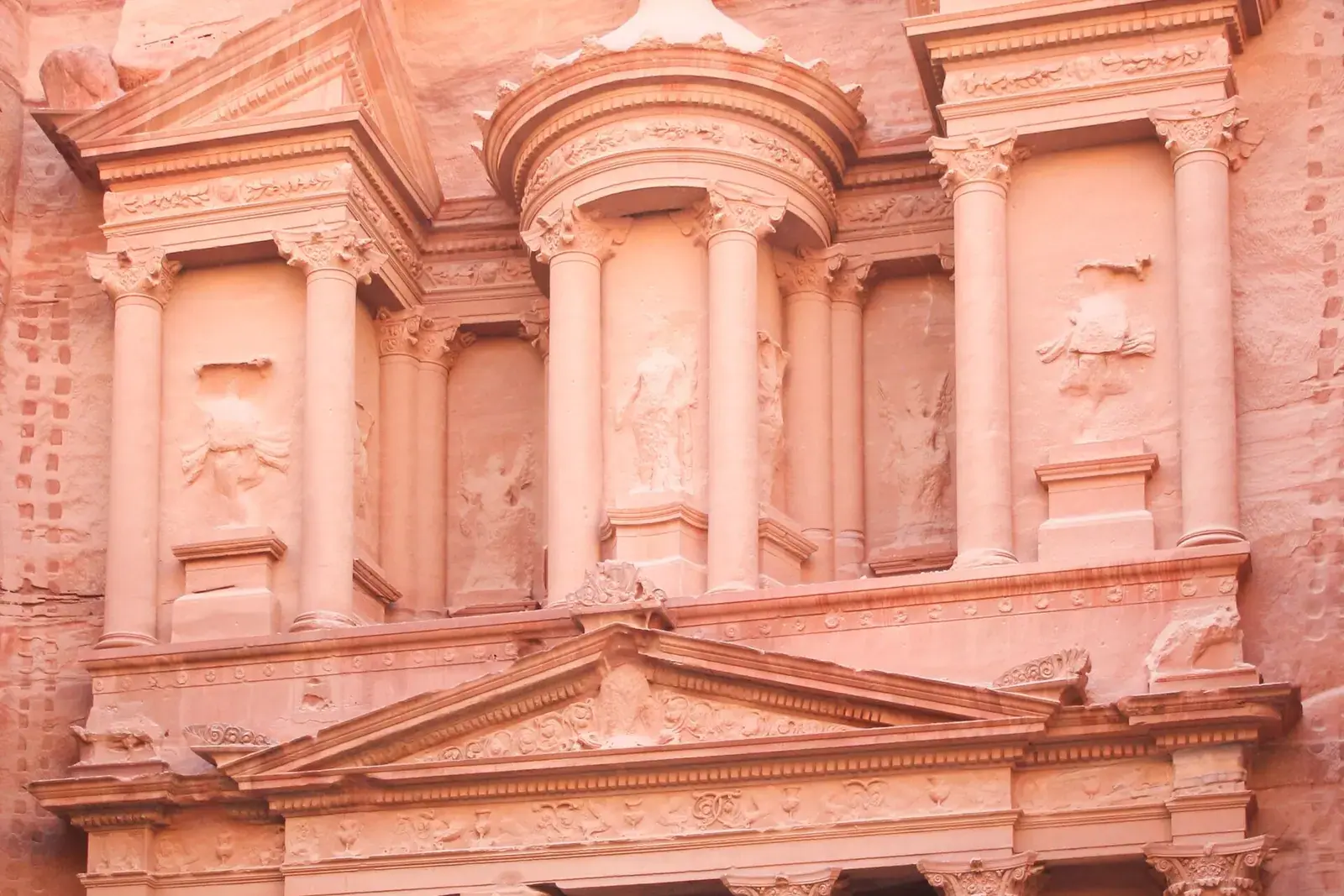
Tickets, opening hours, trails, and how to get there — everything you need to plan a day (or three) in the rose-red city
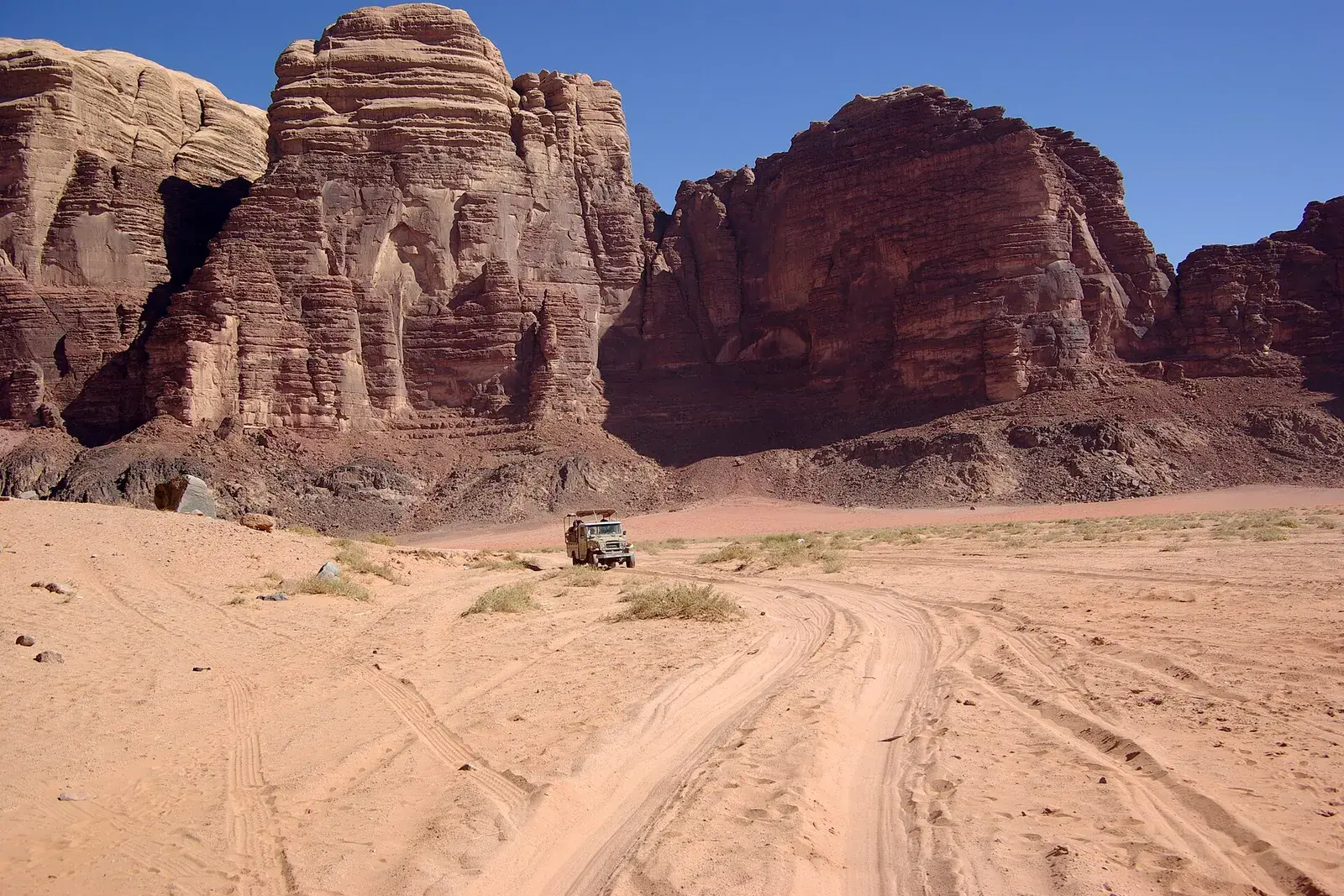
Red sand, sandstone mountains, Bedouin camps, and some of the clearest night skies in the Middle East
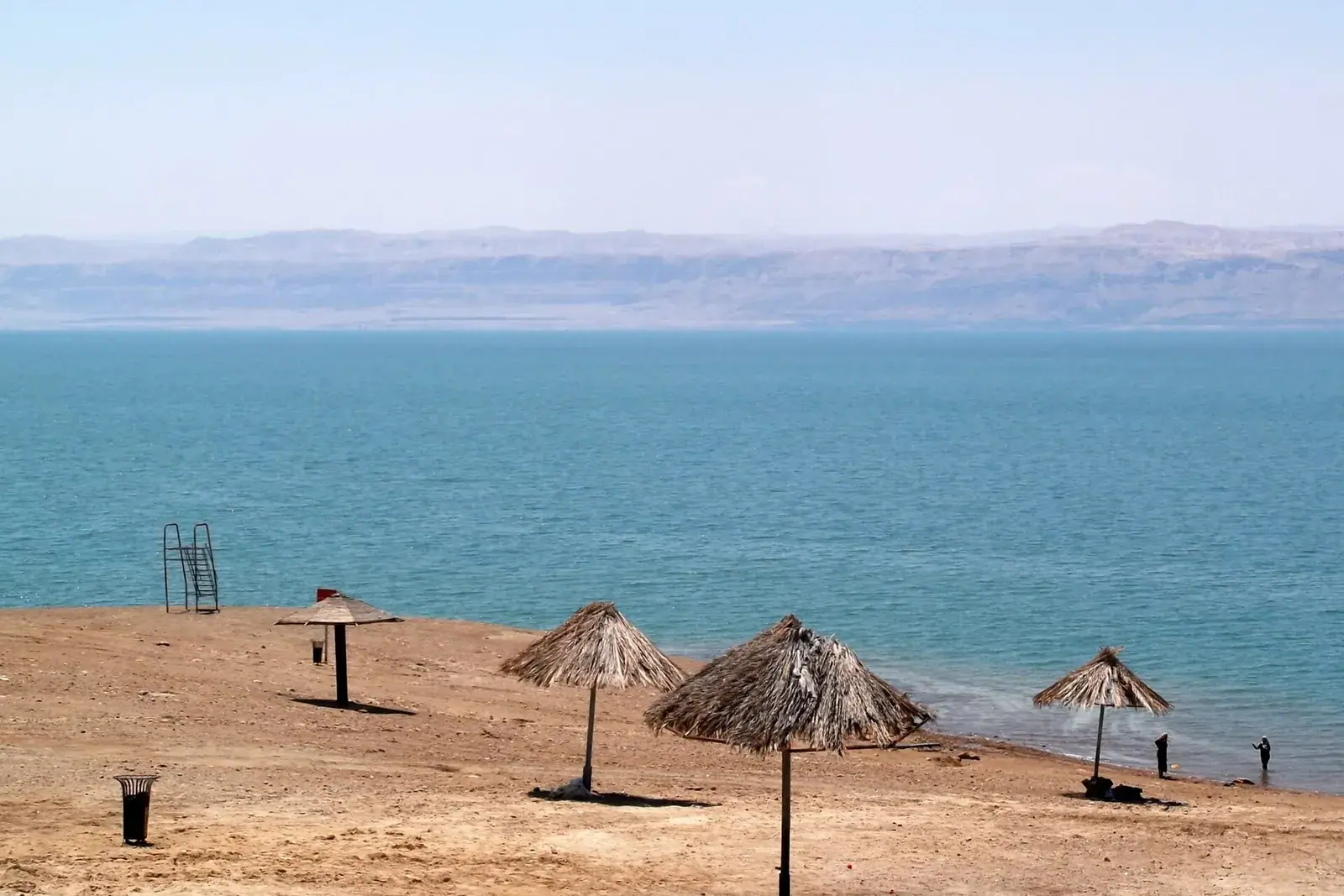
Float at the lowest point on land, about 430 metres below sea level — less than an hour from Amman
Build a day-by-day route through Little Petra (Siq al-Barid) and the rest of Jordan with our free trip planner.